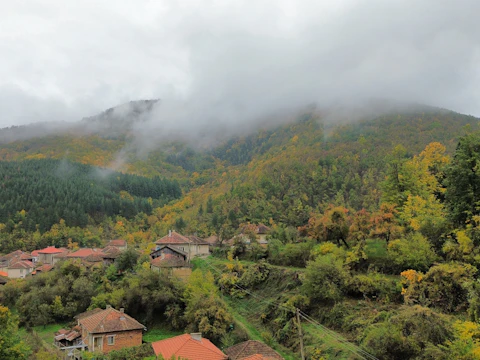
Rural houses can be appealing, particularly when they come with gardens or outbuildings. But before choosing a property, investigate legal title, land classification, physical condition and the true cost of acquisition.
British citizens should obtain independent Bulgarian legal advice about eligibility to acquire the specific type of land. A property advert is not evidence of clean title, permitted use or ownership rights.
Before committing money, investigate land classification, boundaries, service connections, flood exposure and fire safety.
1. Confirm who legally owns it
Ask a qualified independent Bulgarian lawyer to check title records, potential mortgages or other encumbrances, boundaries, access rights and discrepancies between the documents and buildings on site.
2. Understand the land
Houses and their land may have different classifications. Agricultural land has special considerations for some foreign buyers. Do not assume a large garden and a plot described as agricultural can be purchased on the same terms as a residential parcel.
3. Check the building properly
Commission appropriate independent inspections for structural movement, damp, roof condition, timber deterioration, electrics, water, heating, drainage and any unauthorised extensions.
4. Calculate acquisition costs separately
A cheap Bulgarian house still has legal acquisition costs. Budget in euros and ask your independent Bulgarian lawyer and notary for an itemised written estimate before paying a deposit. The taxable amount can be higher than the negotiated price if the municipal tax valuation is higher.
Which costs should you allow for?
- Municipal property-acquisition tax: the legal range for a purchase is 0.1% to 3%; the municipality sets the applicable rate. It is generally calculated using the higher of the agreed price or the municipal tax assessment. Ask for the actual local ordinance and current tax-assessment certificate, not a national percentage copied from an estate-agent advertisement.
- Property Register fee: the Bulgarian government property guide states 0.1% of the certified material interest for registering the title deed. Confirm the current assessment and minimum charges with your notary.
- Notary fee: calculated using the applicable notarial tariff and certified material interest, not a single flat percentage for every purchase. The Bulgarian government property guide also identifies 20% VAT on the notary's service. That does not mean 20% VAT is automatically charged on the price of every second-hand house.
- Independent legal advice, translation and checks: ask for written quotes covering title/encumbrances, survey, cadastral discrepancies, translations, powers of attorney and any mortgage costs.
- Agency fees and money transfers: an agent's commission is not a universal statutory buyer charge. Check the signed agreement and who pays it. Allow for currency-conversion and international-transfer charges if paying from sterling.
- After completion: confirm any municipal registration or declaration required for the particular transaction, plus recurring property tax, waste charges, insurance and utilities. Do not assume an old English-language guide establishes a current filing deadline.
If the municipal tax assessment is no higher than €10,000 and the municipality's rate is an illustrative 2.5%, transfer tax would be €250 and the 0.1% registration fee would be €10. The statutory municipal-rate range of 0.1–3% would instead imply transfer tax of €10–€300 on that same assumed base.
This is not a total purchase-cost quotation: add notary tariff and any VAT, lawyer, translator, survey, agent, banking and other actual costs. A higher official tax assessment increases the tax base. A €5,000 asking price likewise does not guarantee a €5,000 tax base.
Confirm which party is contractually responsible for each cost and ask for the final breakdown before completion. Original sources: Bulgarian government-initiated property portal: taxes and fees ↗; Bulgarian Ministry of Economy: local tax bands ↗; GOV.UK: independent buying checks ↗. Source review: 17 October 2026; actual municipal rates and notarial quotations require transaction-specific verification.
5. Budget for municipal tax, waste fees and continuing ownership
After purchasing a Bulgarian property, ask the municipality's Local Taxes and Fees Department (Местни данъци и такси) for the actual annual immovable-property tax (данък върху недвижимите имоти) and household-waste fee (такса битови отпадъци) for the individual property. These are separate from the one-off acquisition tax paid during a purchase. Your asking price does not determine either recurring bill.
For 2026, Bulgaria's Ministry of Economy lists a statutory annual property-tax band of 0.1 to 4.5 per thousand of the tax assessment, with the specific rate set by each municipality. This is per thousand, not per cent. Normal property-tax due dates are 30 June and 31 October; full payment by 30 April generally gives a 5% property-tax discount. Waste fee amounts, services and instalments are municipality-specific, so obtain the actual 2026 municipal notice rather than assuming it follows property tax.
For a hypothetical €10,000 tax assessment, the statutory property-tax range alone would imply about €1 to €45 annually; that calculation is not a municipal quote and excludes waste fees. In practice the tax assessment, local ordinance, exemptions and occupancy/use may change the amount. Check whether the municipality needs a declaration because of the nature of the transaction or later changes; do not assume every individual buyer must file the same form after every notarial transfer.
Ask for any unpaid assessments, applicable waste-collection zone and service schedule, and separate estimates for insurance, utilities, repairs, heating, security and vacant-home inspections. Verify bank/payment references with the municipality, not through unverified messages. Official references: Bulgarian Ministry of Economy: local taxes and deadlines ↗, Bulgarian Ministry of Finance: immovable-property tax ↗ and official property guidance: waste fees ↗. Reviewed 17 October 2026; local ordinance and individual liability must be checked again each year.
6. Verify local practicalities
Visit the actual approach road, confirm legal access, verify internet availability by address, check utility connections and consider winter conditions and travel to everyday services.
6. Do not rely solely on advertisements
Where we later carry agency-supplied property advertising, it will be clearly identified. Contact independent agents directly. Bulgaria Compass will not take enquiries to forward, arrange viewings, negotiate offers, receive deposits or collect a property sales commission.